ServicesExtractions
Tooth Extractions in Highland Village
When a tooth is too damaged, infected or loose to keep, a careful extraction ends the pain and protects the teeth around it. We explain why it needs to come out, walk you through your insurance, and plan what comes next for your smile.
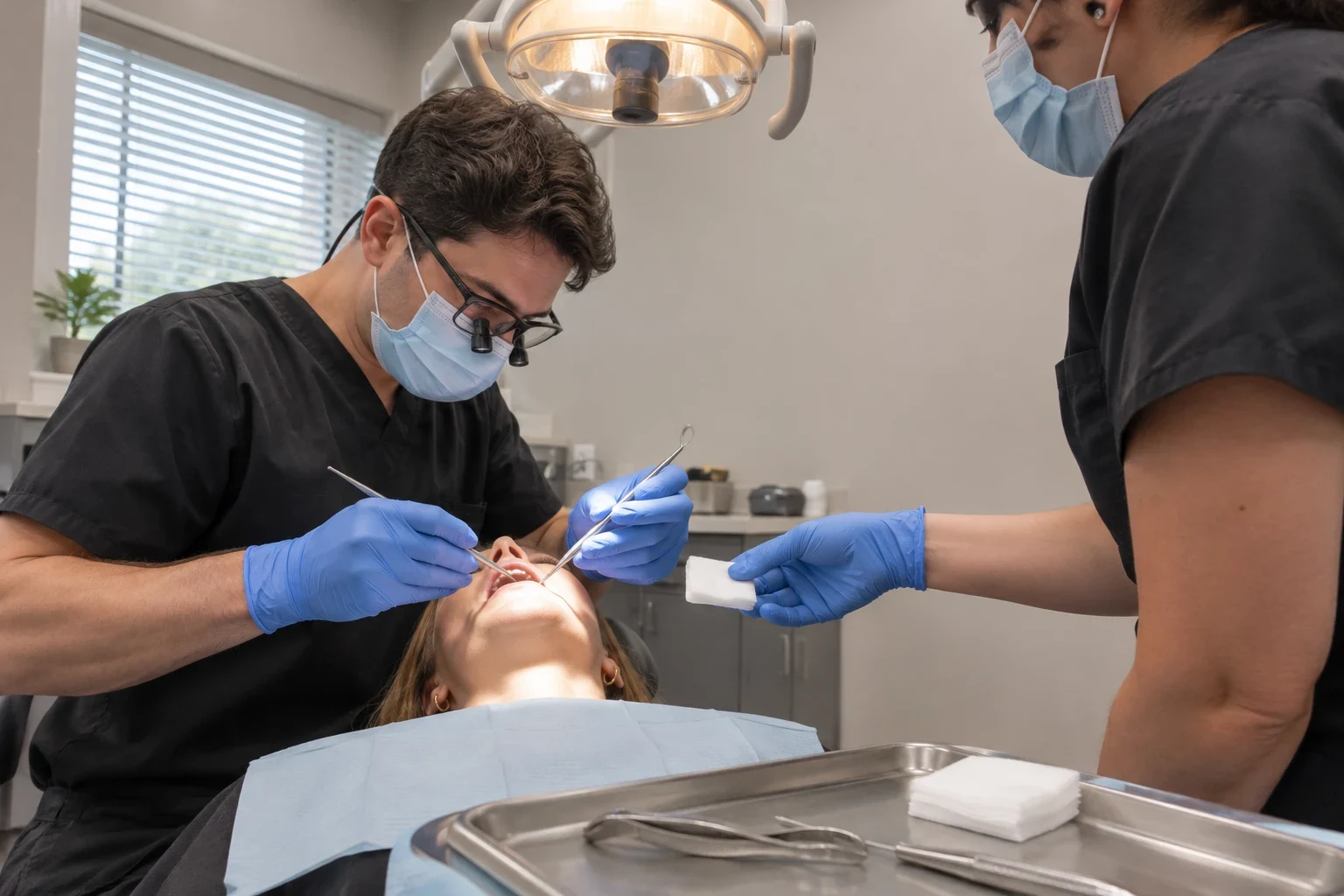
When Removing a Tooth Is the Right Call
We try to save teeth first. A crown or a root canal can rescue many teeth that look hopeless. Sometimes the damage goes too far: a crack that runs below the gum line, decay that has reached the root, or bone loss that has left a tooth loose. In those cases, keeping the tooth only keeps the problem.
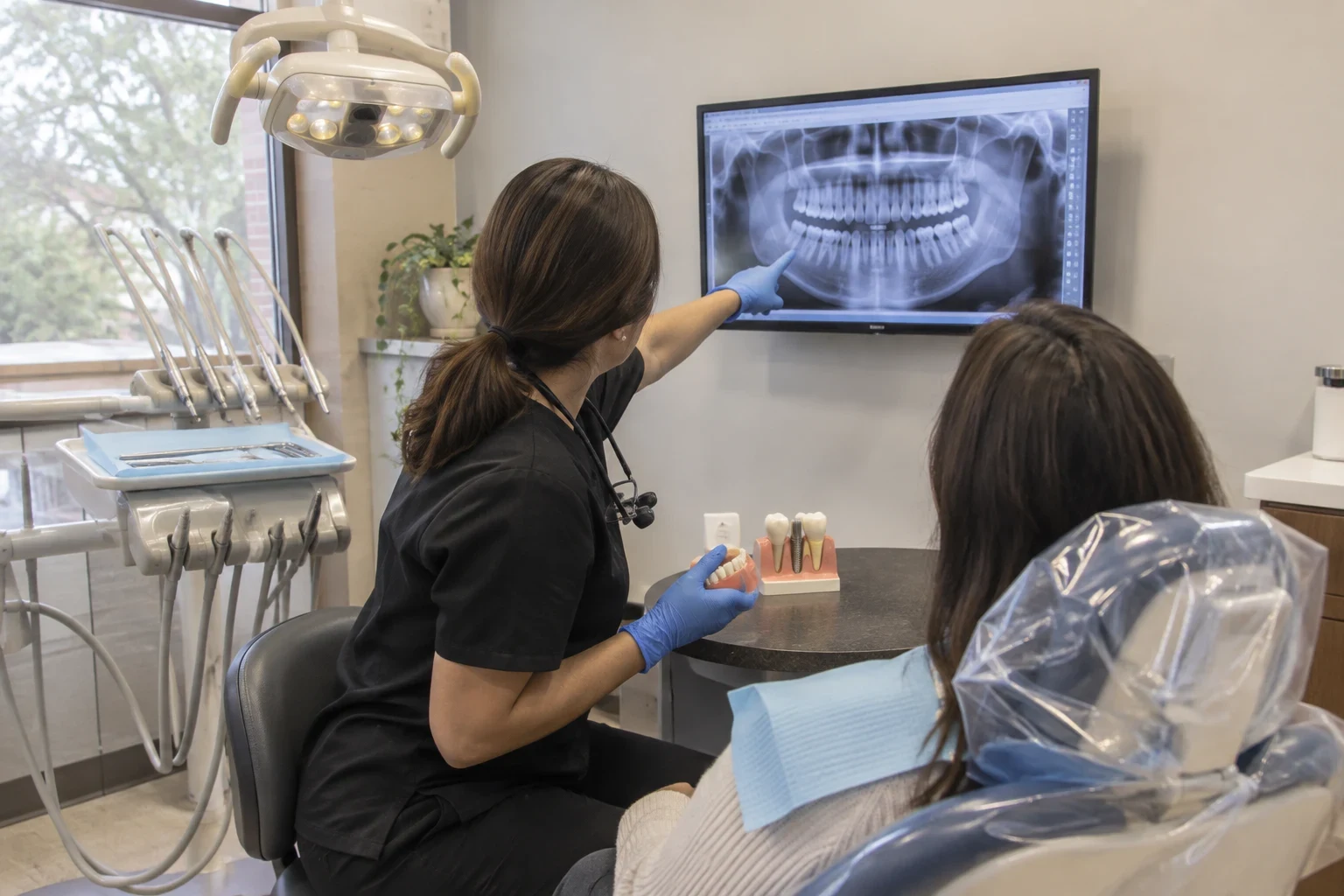
Before we recommend an extraction, we take digital X-rays and, when the roots or nearby nerves need a closer look, a CBCT scan. You see the same images we do. That record also matters for insurance, because most PPO plans want clear documentation of why a tooth had to be removed.
We also talk about the space left behind. A gap can let neighboring teeth drift and the jawbone shrink over time, so we'll explain your replacement options, including dental implants and dentures, before the tooth comes out.
What Your Extraction Includes
Imaging and diagnosis
Digital X-rays show the roots, the surrounding bone and any infection. A CBCT scan is added when we need a three-dimensional view, such as roots that curve or sit close to a sinus or nerve.
Simple or surgical removal
A tooth that is fully visible can usually be lifted out with gentle pressure. A broken tooth or one with tangled roots may need a small incision or to be removed in sections, which protects the bone around it.
Thorough numbing
We use local anesthetic and check that the area is fully numb before we begin. You may feel pressure, but you should not feel sharp pain.
Claim documentation
Your X-rays and clinical notes go with the claim so your plan has what it needs to review it. We'll tell you what your benefits appear to cover, while being clear that your insurer makes the final decision.
Written aftercare
You leave with gauze, simple instructions and our phone number in case questions come up during healing.
Signs a Tooth May Need to Come Out
- A crack below the gum line
- Cracks that split a tooth down toward the root usually can't be sealed. Chewing keeps pushing the pieces apart.
- Decay that has reached the root
- When there isn't enough healthy structure left to hold a crown, even a root canal may not give the tooth a stable future.
- A tooth that has become loose
- Advanced gum disease can destroy the bone that anchors a tooth. A loose tooth often hurts to bite on and can trap bacteria.
- Infection that keeps returning
- Swelling, a bad taste or a pimple on the gum after earlier treatment can mean the infection is deeper than a filling or root canal can reach.
- Pain from a back tooth with no room
- Pressure and swelling far in the back are often wisdom teeth. Our Wisdom Teeth Removal page covers that care in detail.
How Your Visit Works
- 1
Evaluation and imaging
We examine the tooth, take X-rays and review your health history and medications. If the tooth can be saved, we'll tell you.
- 2
Your treatment plan and estimate
We explain whether the extraction is simple or surgical, what your PPO plan is likely to cover, and what your share may be. For larger cases we can request a pre-treatment estimate from your insurer before scheduling.
- 3
The extraction
Once you're numb, we loosen the tooth and remove it, working slowly to protect the bone. Most single extractions take well under an hour in the chair.
- 4
Healing and next steps
A blood clot forms in the socket over the first day or two. We check in, answer questions, and when you're ready, talk through replacing the tooth.
What Shapes the Cost of an Extraction
Every extraction is priced from what the X-rays show, so we give you the details before any work begins. If you have PPO coverage, we'll explain how your plan treats the procedure. If you don't, our in-house Membership Plan for uninsured patients and 0% interest financing for up to 24 months can help.
- Simple versus surgical
- A visible, intact tooth takes less time than one broken at the gum line or one that needs to be sectioned.
- Root shape and position
- Curved, long or fused roots, or a tooth close to a nerve or sinus, call for more care and sometimes a CBCT scan.
- Your plan's benefits
- Coverage depends on your plan, your deductible and how much of your annual maximum is left. We're in-network with 15+ major PPO dental insurance plans.
- Planning for a replacement
- If a dental implant is planned, preserving bone in the socket at the time of extraction may be part of your treatment plan and estimate.
Questions About Extractions
- Will the extraction hurt?
- The area is numbed with local anesthetic before we start, and we confirm it's numb. Most patients describe pressure rather than pain. Some soreness for a few days afterward is normal and usually eases with over-the-counter pain relief we'll recommend.
- Could a root canal save the tooth instead?
- Often, yes, and we'll say so when it's realistic. A root canal works when the root and surrounding bone are healthy enough to support the tooth. If a crack runs too deep or the bone is gone, extraction is the more predictable choice. Our Root Canals page explains that treatment.
- Will my dental insurance cover an extraction?
- Many PPO plans cover extractions in part, but the amount varies by plan and by whether it's simple or surgical. We send X-rays and notes that document why the tooth was removed, and we'll explain your estimated share. We can't promise what a plan will approve, but we'll help you understand the answer it gives.
- How long does healing take?
- The gum usually feels much better within a week, while the bone underneath keeps filling in over the following months. For the first few days, avoid straws, smoking and hard foods so the clot stays in place. That helps prevent a painful dry socket.
- Do I need to replace the tooth?
- Not every tooth needs replacing, especially some back teeth. But a gap can let nearby teeth shift and the jawbone thin out. We'll go over dental implants, bridges and dentures so you can decide on your own timeline.
Find Out Whether Your Tooth Can Be Saved
We'll look at the X-rays with you, explain your options and your coverage, and plan the gentlest path forward. Patients come to us from Highland Village, Flower Mound, Lewisville and nearby towns.