Can I Sleep With Dentures In? Advice From Our Highland Village Dental Team
A few hours without your dentures each night does more for your gums and the dentures themselves than most patients expect.
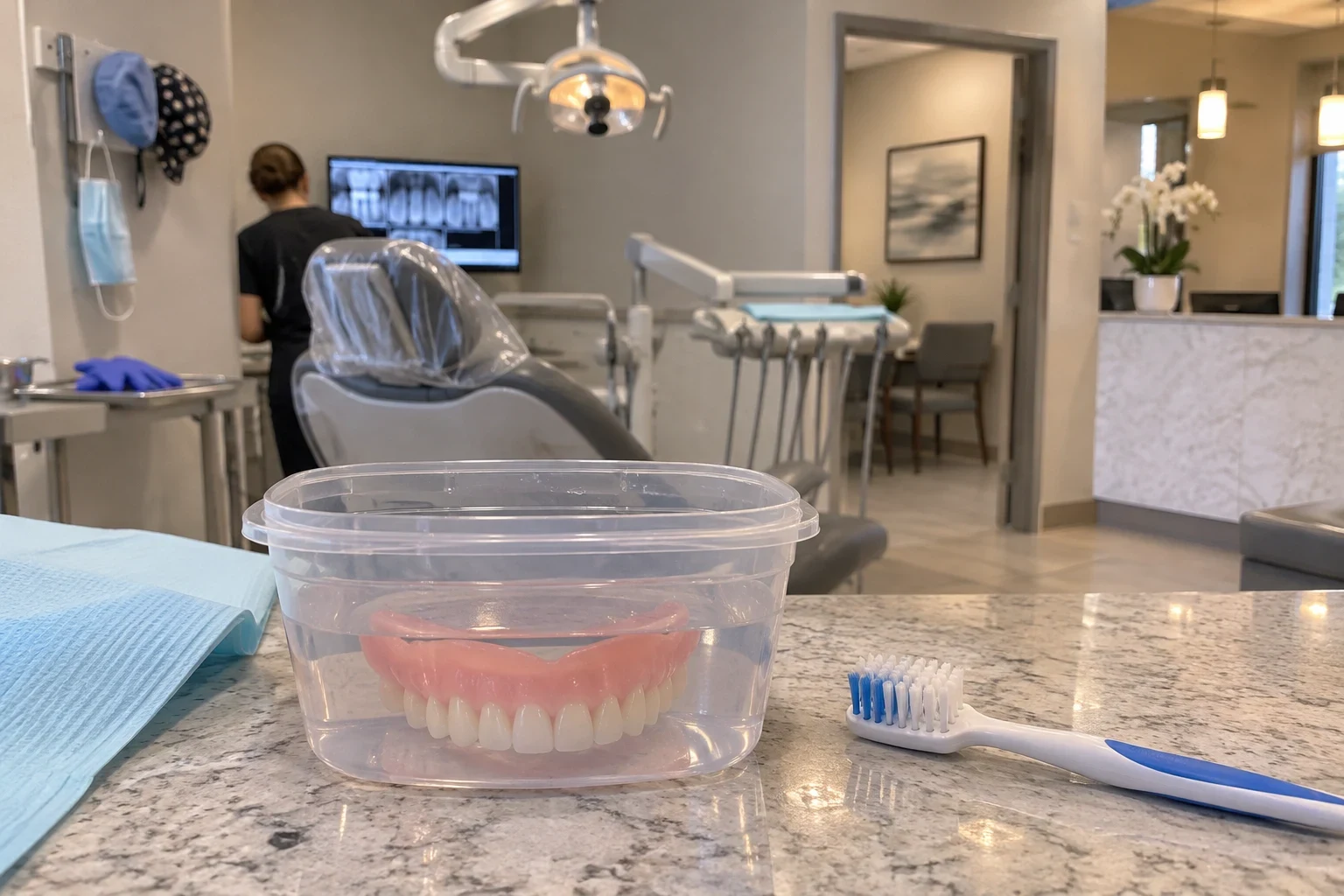
Can I sleep with dentures in?
For most people, no. Taking dentures out at night gives your gums time to rest and recover, lowers the risk of fungal infection and helps the denture last longer. The main exception is the first night or two after extractions with immediate dentures, when we usually ask you to keep them in. For fit questions, reach us at (972) 367-3087.
Why your gums need a break overnight
A denture rests directly on soft tissue all day. That tissue was built to have a little air and saliva moving across it, and it needs some time uncovered to stay healthy. When a denture never comes out, the gums underneath stay warm, damp and pressed, which is the setting yeast and bacteria like best.
The most common result is denture stomatitis, a red, tender patch on the palate or ridges that matches the shape of the denture. Many patients do not notice it at first because it often does not hurt. Research has also linked overnight denture wear in older adults to a higher risk of pneumonia, since bacteria on the denture surface can be breathed in during sleep.
Constant pressure matters too. The bone under your gums slowly reshapes once teeth are gone, and steady load from a denture worn day and night can speed that change. Over time the denture loosens, rubs and needs relining sooner.
- Red or swollen gums under the denture
- Small cracks or soreness at the corners of the mouth
- A white coating on the palate or tongue
- A denture that feels looser each month
- Sore spots that return in the same place
The first nights after extractions are different
If you had teeth removed and an immediate denture placed the same day, we will usually ask you to leave it in until your first follow-up visit, including that first night. In that early stage the denture works like a bandage. It protects the extraction sites, helps control bleeding and limits swelling so the gums heal close to the shape of the denture.
After that first check, most patients move to the normal routine of taking the denture out to sleep. Your mouth changes quickly during the healing months, so expect a few adjustments and possibly a reline before a final fit. We will tell you exactly when to switch, and it is worth following that timeline rather than guessing.
A simple nightly routine that protects your denture
Acrylic denture bases and teeth are durable, but they are not designed to dry out or sit in hot water. A dry denture can warp slightly, and even a small change in shape affects the seal and comfort the next morning. A few minutes each evening keeps the material in good condition.
Handle the denture over a folded towel or a sink partly filled with water, so a slip does not crack the base or chip a tooth.
- Rinse the denture after your last meal to remove loose food
- Brush it gently with a soft denture brush and a non-abrasive cleaner, not regular toothpaste, which can scratch the surface
- Soak it overnight in cool or lukewarm water or a denture soaking solution
- Brush your gums, tongue and palate with a soft brush, and clean any natural teeth that remain
- Rinse the denture well in the morning before putting it back in
Are implant-supported dentures any different?
It depends on the design. A snap-on denture that clips onto two or more dental implants is still removable, and we generally recommend taking it out at night like a traditional denture. That lets you clean the attachments and the gums around each implant, which is where plaque likes to collect.
A fixed implant bridge, sometimes called a full-arch restoration, is a different case. It is anchored to the implants and only comes out at our office, so you sleep with it in and clean around it with a water flosser and special brushes. For patients who dislike taking teeth out at night or who struggle with a loose lower denture, this is often the reason they ask about dental implants.
Checking what your insurance covers for fit problems
If your denture feels loose enough that you are tempted to sleep in it so it stays settled, that is usually a sign it needs an adjustment or reline. Many PPO dental plans cover relines and replacement dentures, but they often set frequency limits, such as how many years must pass before a new denture is covered. We are in-network with 15+ major PPO dental insurance plans, and our office can help you look at your benefits before treatment so you know what to expect.
For patients without insurance, we offer an in-house Membership Plan, and 0% interest financing for up to 24 months is available, with no credit score impact to check for preapproval. We explain the options plainly and do not promise coverage your plan does not include.
More questions about dentures at night
Is it okay to nap with my dentures in?
A short daytime nap is not a major concern for most people. The goal is a longer stretch every day, usually overnight, when the gums are uncovered.
What if I feel embarrassed taking my dentures out?
That is a common feeling, and many patients simply take them out at bedtime in private. If it bothers you a lot, ask us about implant options that stay in place.
Can I use denture adhesive overnight instead?
Adhesive does not solve the problem, because the gums still stay covered and the adhesive can trap bacteria. If you rely on more adhesive over time, the denture likely needs a reline.
How often should my dentures be checked?
We suggest a yearly visit so we can check fit, look at the tissue under the denture and catch sore spots or wear early.
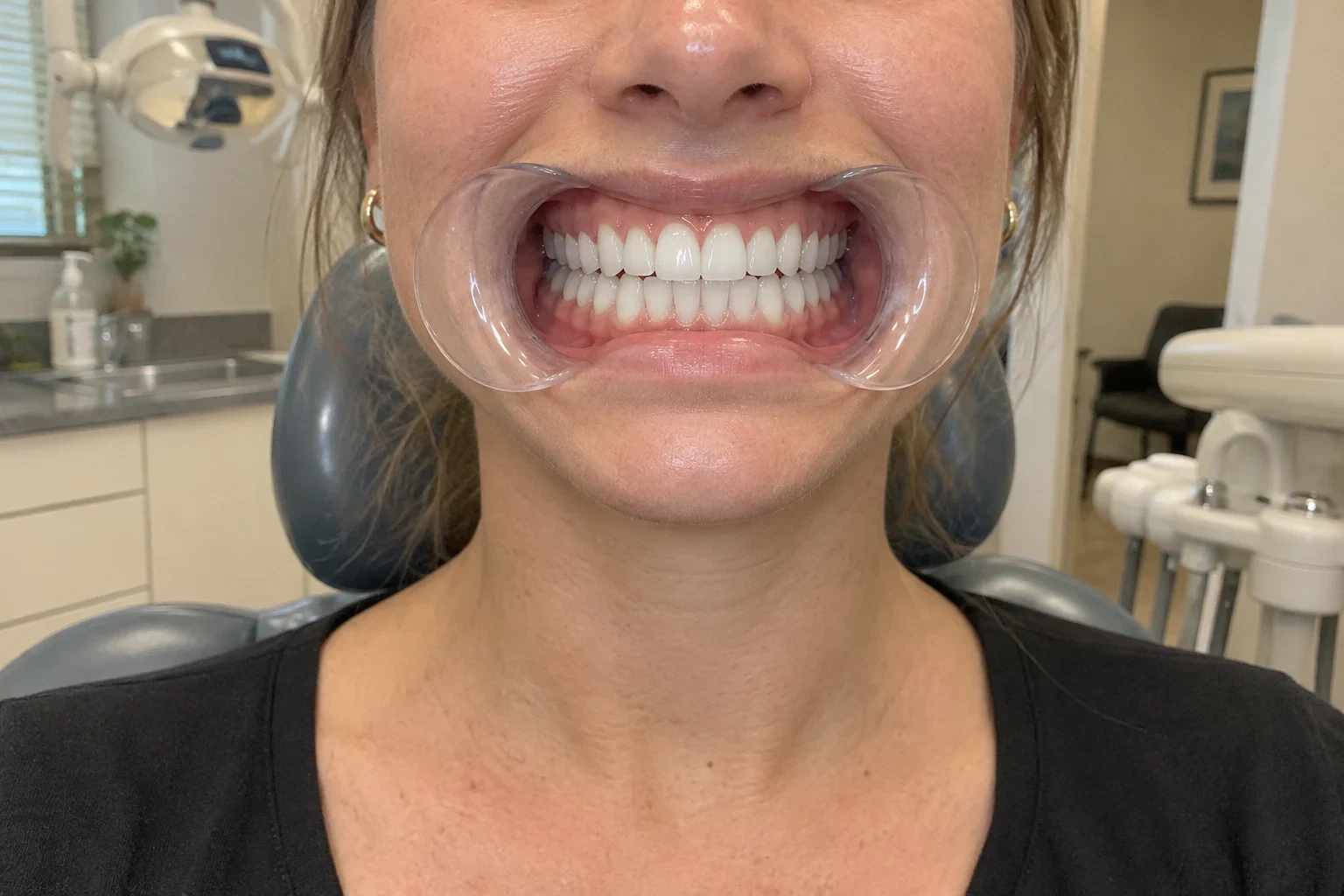
Is your denture fitting the way it should?
Call to set up an appointment. We will check the fit, look at your gums and talk through a treatment plan and your insurance or financing options.