ServicesDental Implants
Dental Implants in Highland Village
A dental implant replaces a missing tooth from the root up, so it chews, feels and looks like your own. We plan each one from a 3D scan, explain what your dental plan is likely to cover, and lay out the full cost before you commit.
What a dental implant is, and when it makes sense
An implant has three parts: a small titanium post that sits in the jawbone, a connector called an abutment, and a crown shaped and shaded to match the teeth beside it. Titanium bonds with bone as it heals, which is why a well-placed implant stays put and does not shift the way a removable partial can.
It is usually the right choice when one or a few teeth are missing, when a cracked tooth cannot be saved, or when a loose denture needs something solid to hold onto. It is not always the right choice. If your bone, gums or health make another option wiser, we will tell you and walk you through it.
Many patients come to us unsure whether their plan pays for implants at all. We read your benefits with you, document what we find, and give you a clear picture of where your coverage may help and where it likely will not.
What your implant care includes
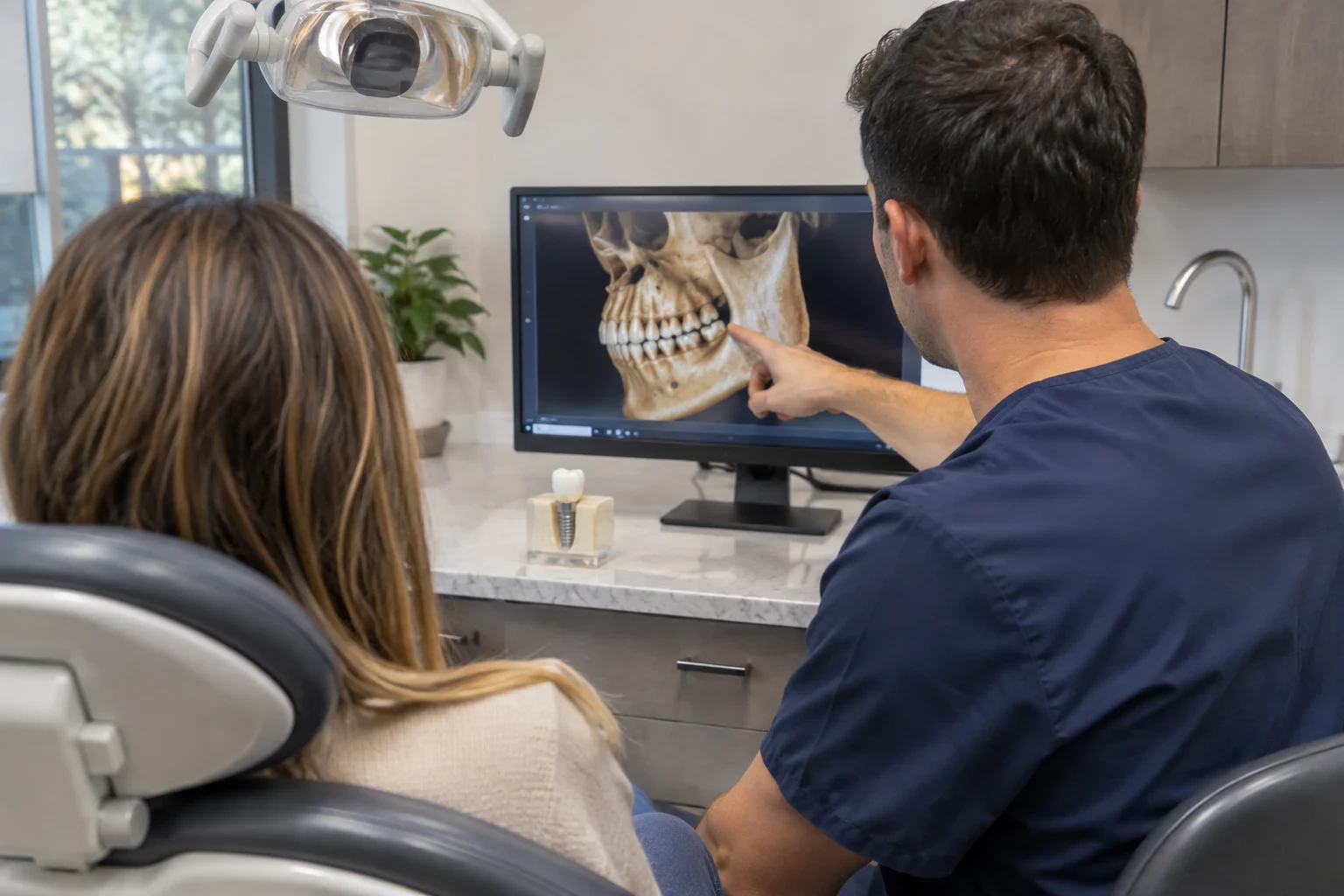
Evaluation with a CBCT scan
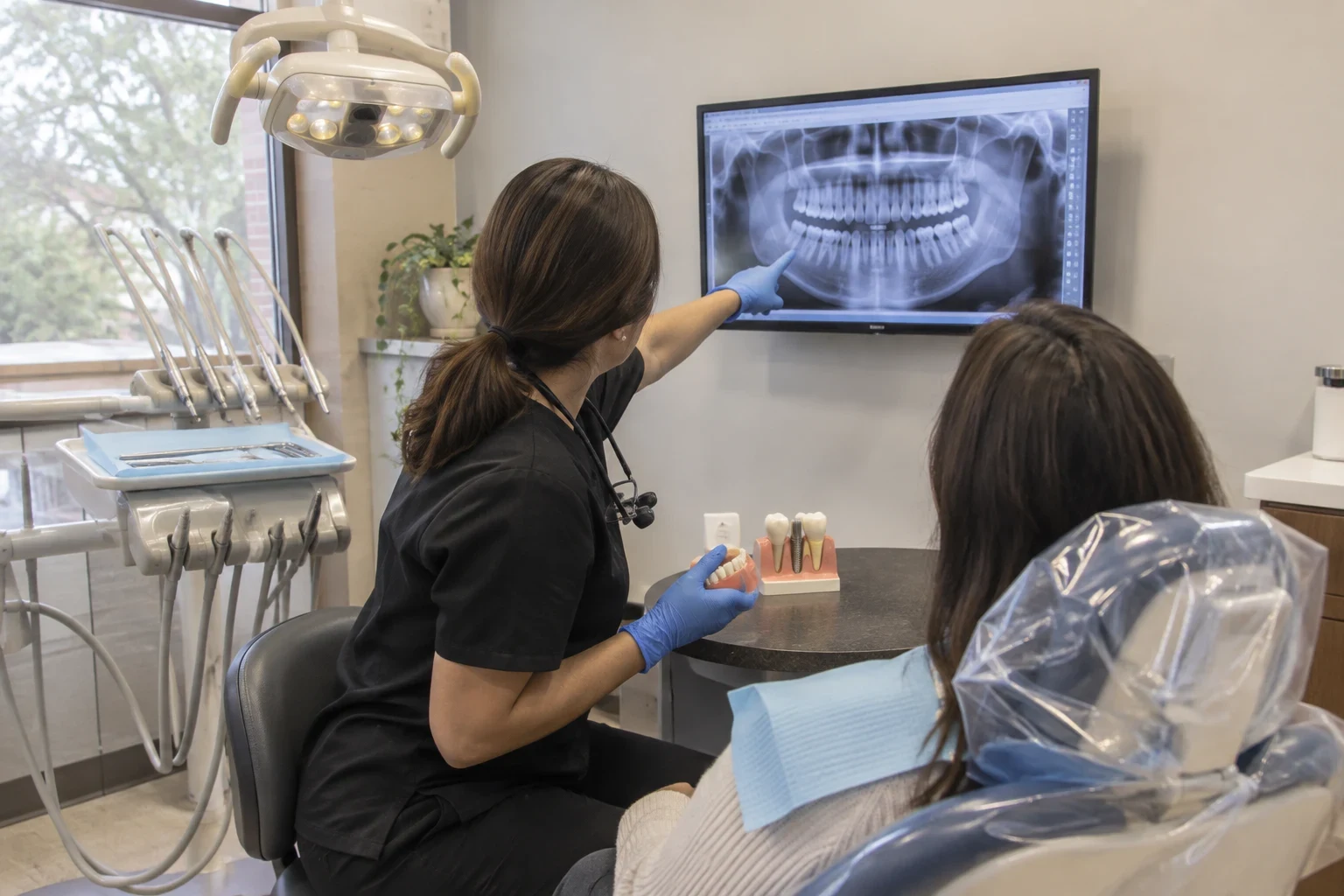
Our $25 Focused Evaluation covers a comprehensive exam, digital X-rays, a CBCT scan if needed, and treatment planning and consultation. The 3D scan shows bone height, width and nerve position, which a flat X-ray cannot.
Records your insurer can read
We keep the scans, photos and notes that explain why a tooth needs replacing. When your plan asks for a predetermination, we send that documentation so you hear back before treatment instead of after.
Bone grafting when the scan calls for it
After a tooth has been gone a while, the bone underneath often shrinks. If there is not enough to hold a post, we explain the graft, why it is needed and how it changes your timeline.
Post placement
The titanium post is placed with local numbing so the area is comfortable. Most patients describe the next few days as sore rather than painful.
A crown made for that spot
Once the post has healed into the bone, we fit a crown matched in shape and shade to your smile. We check your bite carefully so the new tooth does not take more force than its neighbors.
Options for several missing teeth
Two or more implants can support a bridge or anchor a denture. If you are weighing implants against a removable set, our Dentures page covers that side of the choice.
Signs an implant may be worth discussing
- A gap that has started to change your bite
- Neighboring teeth tend to tilt into an empty space over time. Chewing shifts to one side, and the opposing tooth can drift too.
- A tooth that is cracked below the gumline
- Some cracks run too deep for a crown or a root canal to fix. When that happens, removing the tooth and planning an implant is often the steadier path.
- A denture that slips when you eat or talk
- Two implants under a lower denture can hold it firmly in place.
- A bridge that keeps failing
- If an old bridge has decay under it or keeps coming loose, an implant may replace it without relying on the teeth next door.
- A tooth that is already scheduled to come out
- If you are planning an extraction, ask about the implant before the tooth is removed. Sometimes the site can be prepared at the same visit, which can save time later.
How the implant process runs
- 1
Evaluation and scan
We examine the area, take digital X-rays and a CBCT scan if needed, and talk through what you want from the result. You leave with a written treatment plan and a cost estimate for each stage.
- 2
Benefits check and predetermination
We review your PPO plan for annual maximums, waiting periods and any missing-tooth clause. Where it helps, we ask your plan for a predetermination so you know what it expects to pay before work begins.
- 3
Placing the post
On the day, we numb the area, place the post and give you clear aftercare notes. Most people return to normal routines within a day or two.
- 4
Healing
The bone needs time to bond with the titanium, usually a few months. We see you along the way to check that the site is healing well.
- 5
Fitting the crown
We attach the abutment, seat the finished crown and adjust your bite until it feels natural.
What shapes the cost of an implant
No two implant cases are priced the same, because the mouth underneath is different every time. Your evaluation gives us what we need to put a line-item estimate in writing. We also show you which items your insurance is likely to apply to and which it will likely leave to you.
- How many teeth you are replacing
- A single implant and crown is one cost. A bridge on two implants or a denture anchored by several is another.
- Bone and gum condition
- Grafting adds a step and a fee. The CBCT scan tells us early whether you will need it, so it is not a surprise halfway through.
- Whether a tooth must come out first
- An extraction, and sometimes a grafted socket, comes before the post. Each is listed separately on your plan.
- Your insurance plan's limits
- Many PPO plans cover part of an implant, some cover only the crown, and annual maximums cap what any plan pays in a year. We are in-network with 15+ major PPO dental insurance plans and can help you time stages across benefit years.
- How you choose to pay
- We offer 0% interest financing for up to 24 months, no credit score impact to check for preapproval. If you have no coverage, our In-house Membership Plan for uninsured patients is worth asking about.
Dental implant questions we hear often
- Will my dental insurance pay for an implant?
- It depends on the plan. Some PPO plans cover a share of the post and crown, some cover only the crown, and some exclude implants or limit them through a missing-tooth clause. We read your benefits with you and can ask your plan for a predetermination, though the plan makes the final decision.
- Does getting an implant hurt?
- The area is numbed for placement, so most patients feel pressure rather than pain. Expect some soreness and mild swelling for a few days, which over-the-counter pain relief usually handles. We go over aftercare with you before you leave.
- How long does the whole process take?
- Most cases take several months from placement to the final crown, because the bone needs time to bond with the post. A graft or an extraction beforehand can add time. Your treatment plan will show the expected timeline for your case.
- Am I a candidate if I have been missing a tooth for years?
- Often, yes. Bone does shrink after a tooth is lost, but grafting can rebuild it in many cases. The CBCT scan at your evaluation shows exactly how much bone you have to work with.
- What if I do not have insurance?
- Many of our implant patients are uninsured. You can ask about our In-house Membership Plan and our 0% interest financing, and we will give you the full cost in writing so you can plan ahead.
Find out whether an implant fits your situation
Start with the $25 Focused Evaluation. You will see your scan, hear an honest recommendation and know what your plan is likely to pay before you decide anything.