ServicesRoot Canals
Root Canals in Highland Village
When the nerve inside a tooth is inflamed or infected, a root canal can stop the ache and let you keep the tooth. We take careful images, explain what we see, and walk you through what your insurance is likely to cover before treatment begins.
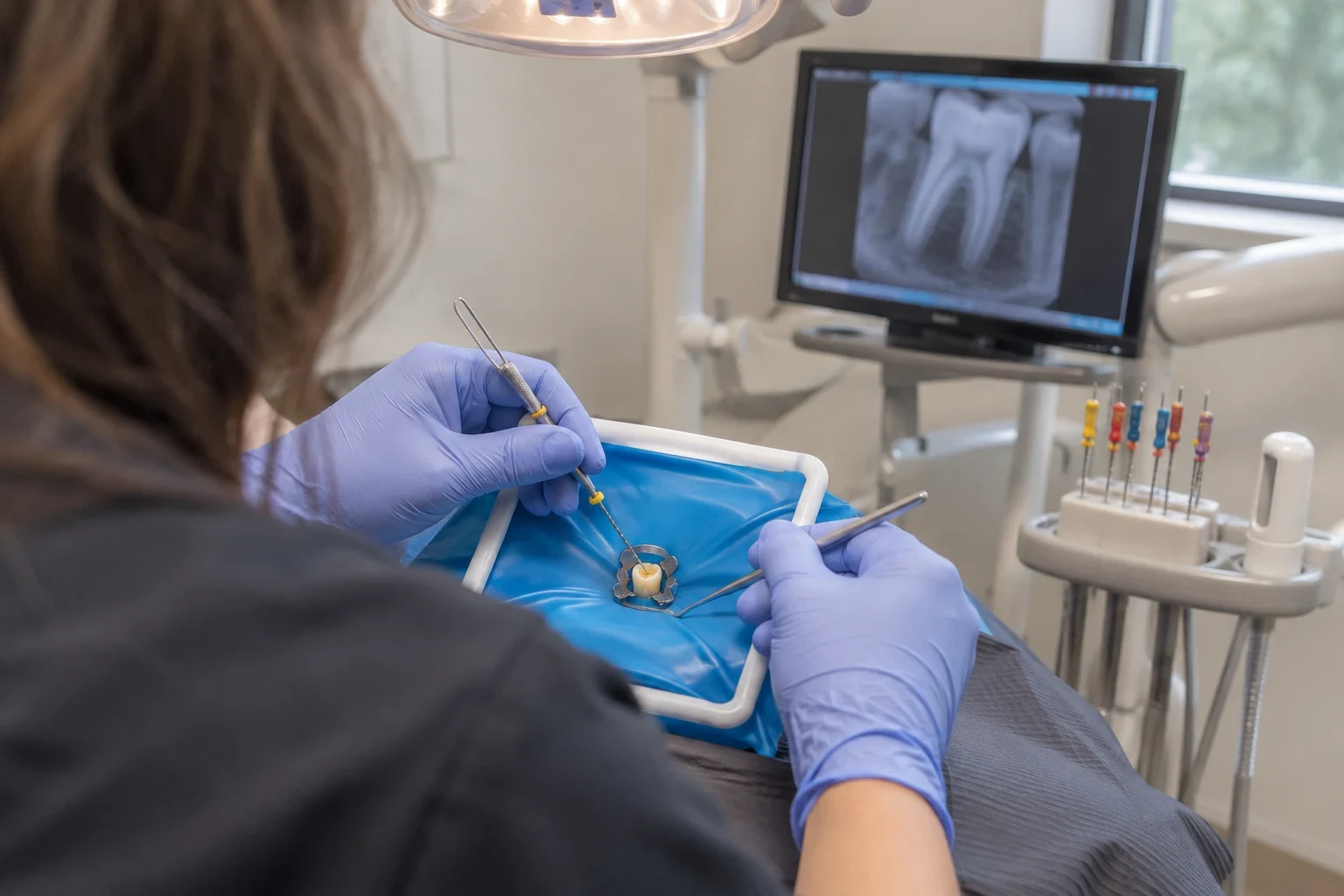
Keeping a tooth that still has a future
Inside every tooth is a small chamber of soft tissue called the pulp. Deep decay, a crack or an old filling that has leaked can let bacteria reach it. Once that tissue is infected, it will not heal on its own, and the pain usually returns even if it fades for a while.
A root canal removes the damaged pulp, cleans and shapes the narrow canals, then seals them so bacteria cannot move back in. The outer tooth stays in place, which keeps your bite even and your jawbone supported. For many patients that is a better long-term answer than pulling the tooth and replacing it later.
It is not always the right call. If a tooth is split below the gumline or has too little structure left to hold a restoration, we will tell you plainly and talk through extractions or dental implants instead.
What your root canal treatment includes
- Digital X-rays and a CBCT scan if needed
- Flat X-rays show decay and the outline of the roots. When canals are curved or an infection is hard to see, a 3D CBCT scan shows the full shape of the tooth and the bone around it.
- Thorough numbing
- We test the area before we begin and add more anesthetic if you feel anything sharp. Most patients describe the visit as similar to a large filling.
- Cleaning and sealing the canals
- Fine instruments remove the infected tissue, and the canals are rinsed with disinfecting solutions. We then fill them with a rubber-like material and seal the opening.
- A plan for the final restoration
- Back teeth that have had a root canal tend to become brittle. We explain whether you need a crown to protect the tooth and when it should be placed.
- Records for your PPO plan
- We keep the images and clinical notes that PPO plans often ask for, and we can send a pre-treatment estimate so you see your expected share before work begins.
Signs a tooth may need a root canal
Pain that lingers after hot or cold
A quick twinge that fades is common. Sensitivity that keeps aching for a minute or more after coffee or ice water often points to an irritated nerve.
Throbbing that wakes you up
A deep, pulsing ache that gets worse when you lie down is a classic sign of infection inside the tooth.
Swelling or a pimple on the gum
A small bump near the root that drains or leaves a bad taste usually means infection has spread past the tip of the root.
A tooth turning gray or dark
Discoloration after an old injury can mean the pulp has died, even if it no longer hurts.
Tenderness when you bite
If chewing on one side feels sore or pressure makes a single tooth ache, the tissue around the root may be inflamed.
What affects the cost of a root canal
There is no single price for a root canal, because the work depends on the tooth and what we find inside it. We give you a written treatment plan after your evaluation so the numbers are clear before you decide. Plans differ, so we read your benefits with you rather than guessing.
Which tooth
Front teeth usually have one canal. Molars can have three or four, some of them curved or narrow, which takes more time.
First treatment or retreatment
Redoing an older root canal means removing the previous filling material first, which adds steps.
Whether a crown is needed
A crown is a separate procedure with its own cost. On back teeth it is usually recommended to keep the tooth from cracking.
Your coverage and payment options
We are in-network with 15+ major PPO dental insurance plans. If you have no dental coverage, our In-house Membership Plan for uninsured patients may lower your cost, and 0% interest financing for up to 24 months is available, with no credit score impact to check for preapproval.
How a root canal visit goes
- 1
Evaluation and imaging
We examine the tooth, take digital X-rays and add a CBCT scan if the roots need a closer look. You get a clear answer on whether the tooth can be saved.
- 2
Your treatment plan and costs
We write out the plan, check your PPO benefits or Membership Plan pricing, and explain what your share is likely to be. Nothing starts until you agree.
- 3
Treatment
After numbing, a thin rubber sheet isolates the tooth to keep it clean and dry. Most root canals take one visit; a badly infected tooth may need two.
- 4
Recovery and the crown
Expect some soreness for a few days, usually eased with over-the-counter pain relievers. If a crown is part of the plan, we schedule it soon so the tooth is protected while you chew.
Root canal questions patients ask
Does a root canal hurt?
The infection is what hurts; the treatment is meant to relieve it. With good numbing, most patients feel pressure rather than pain. The tooth and gum can be sore for a few days afterward, and that usually settles steadily.
Should I save the tooth or just have it pulled?
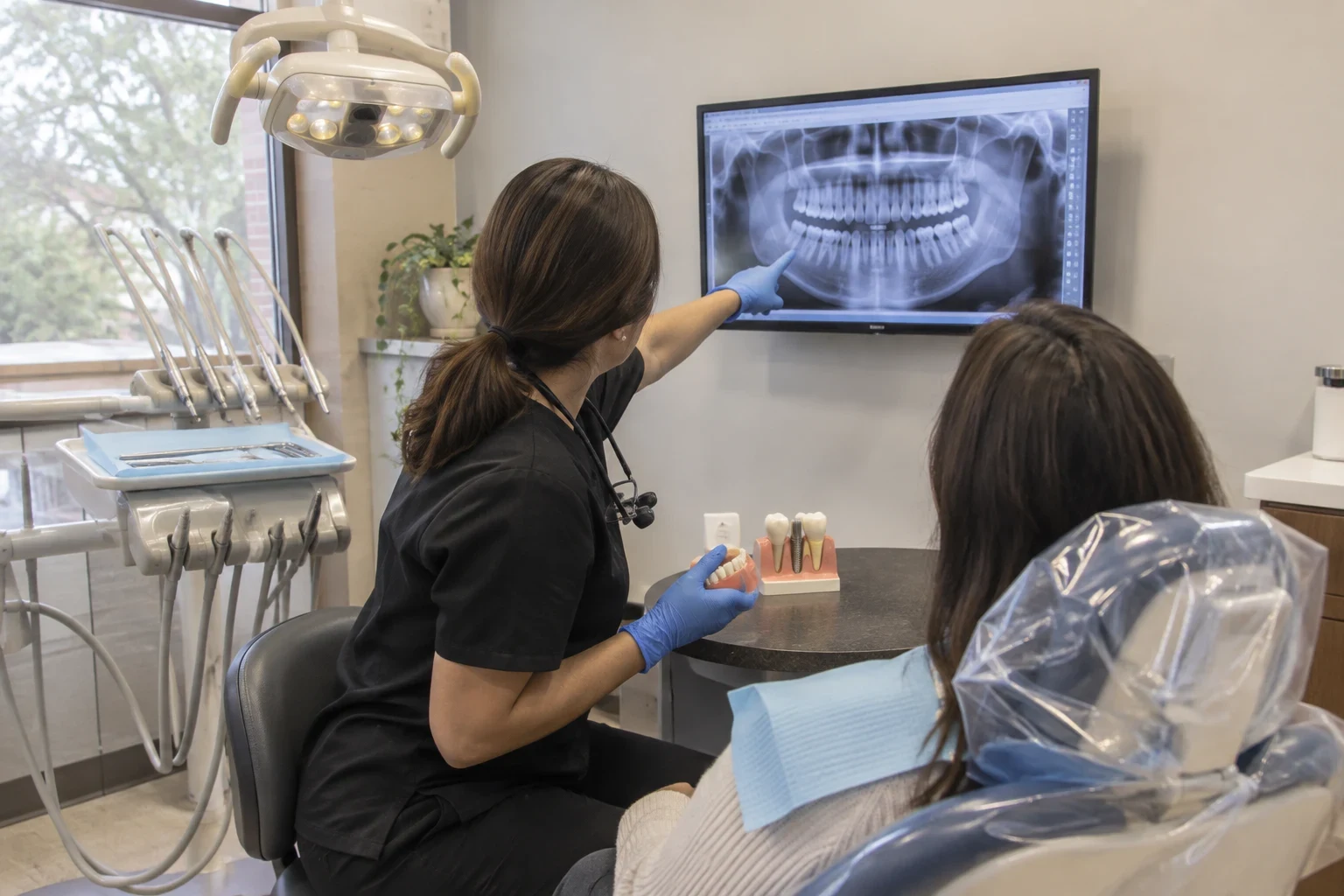
If the tooth has enough healthy structure and the roots are sound, keeping it is often the simpler path over time. Pulling it may cost less today, but the gap usually needs a bridge, denture or implant later to keep neighboring teeth from shifting. We show you the images and give you an honest opinion either way.
Will my PPO insurance cover it?
Many PPO plans cover part of a root canal, often at a different percentage than cleanings, and the crown may fall under another category. Waiting periods and annual maximums also matter. We can send a pre-treatment estimate to your plan and explain the response with you, though the final decision belongs to the insurance company.
How long does it take?
Most root canals are finished in one visit of about an hour to an hour and a half, depending on the tooth. Molars and retreatments can take longer or need a second appointment.
Can I go back to work afterward?
Most people return to normal activity the same day. Your lip and cheek may stay numb for a few hours, so wait to eat until the feeling returns, and chew on the other side until the final restoration is in place.
Find out if your tooth can be saved
Our $25 Focused Evaluation includes a comprehensive exam, digital X-rays, a CBCT scan if needed, and treatment planning and consultation. You leave knowing what the tooth needs and what your plan is likely to pay.